
"the difference is Africa"
7000 article(s) found

Arusha Coffee Manor with Pure Flavor Coffee Bean cultivation geographical location, climate, altitude is simple
Tanzania covers an area of 945087 square kilometers, of which Zanzibar is 2657 square kilometers. It consists of the mainland, Zanzibar and more than 20 small islands. Located in eastern Africa and south of the equator, the continent is bounded by the Indian Ocean to the east, Zambia, Malawi and Mozambique to the south, Rwanda, Burundi and the Democratic Republic of the Congo to the west, and Kenya and Uganda to the north. The coastline of the mainland is 840 kilometers long.

A brief introduction to the treatment method of grinding degree and baking degree of fine coffee beans in Arusha Coffee Manor with strong sour taste
Kilimanjaro Coffee (Kilikmanjaro Coffee) is produced in Mount Kilimanjaro, the highest mountain in Africa in northeastern Tanzania. Its coffee is of good quality, rich aroma and outstanding sour taste, so it is suitable for the preparation of comprehensive coffee. Kilimanjaro coffee is an important lifeline of the Tanzanian economy. About 17% of the foreign exchange is created by coffee, which is mainly produced.

Out of Africa, Kenyan coffee beans, fruit flavor, Kenyan aa coffee, inexpensive, excellent quality.
Professional coffee knowledge exchange more information about coffee beans Please follow the coffee workshop (Wechat official account cafe_style) entered Kenya in the 19th century, when Ethiopian coffee drinks were imported to Kenya through South Yemen. But it was not until the beginning of the 20th century that the bourbon coffee tree was saint. The Austin Mission (St.AustinMission) was introduced. Most Kenyan coffee beans grow at altitude 1.

Coffee Golden Bean Competition | introduction to African TOH Coffee Competition | Coffee beans in TOH Competition
Professional coffee knowledge exchange more coffee bean information please follow the coffee workshop (Wechat official account cafe_style) every year major coffee producing countries in Africa hold a national raw bean competition, called "Harvest season Flavor Competition" (The Taste of Harvest; TOH), similar to the Cup of Excellence Cup in Central and South America, TOH becomes the discovery of Kenya and Yesso.

The coffee bean producing area of Africa is so worshipped by the Kenyan coffee beans, the implication of love in the Garden of Eden.
Professional coffee knowledge exchange more coffee bean information please follow the coffee workshop (Wechat official account cafe_style) front street-Kenya Coffee introduction Kenya coffee is mostly grown at an altitude of 1500Murray 2100m and is harvested twice a year. Its main feature is a distinct fruit aroma, the common fruit aroma is citrus. Kenyan coffee has a multi-layered taste and the acidity of juice.

Introduction to the characteristics of fine coffee flavor manor in Rwanda, a coffee-producing country in eastern Africa
After fermentation, rinse again, we should quickly put the processed raw beans on the drying bed, which is built by local farmers carrying a piece of wood and covering it with a breathable black weaving net. what we see this time is all natural drying, not through the dryer, it usually takes 10 seconds and 30 days to dry. And when there must be no rain.

Boutique coffee beans from Ethiopia in Africa unique flavor of Ethiopian boutique coffee
The species of Geisha was discovered in the Rose Summer Forest of Ethiopia in 1931 and sent to the Coffee Institute in Kenya; it was introduced to Uganda and Tanzania in 1936, in Costa Rica in 1953, and Panama was introduced in the 1970s by Francesca of Dongba Seven Farm Garden. Mr. Serraxin got the seeds from CATIE in Costa Rica and started growing Rosa Coffee because
Is the origin of coffee in Africa? Description of flavor and taste of Essel coffee bean origin introduction
Professional coffee knowledge exchange more coffee bean information please follow the coffee workshop (Wechat official account cafe_style) front street-Ethiopian coffee introduces coffee in the world is rich and interesting, coffee from each continent has some common characteristics, coffee is the product of the equator to 15 degrees north latitude, therefore, South America and Asia

Introduction of boutique coffee beans at Sigri Manor, Papua New Guinea. Is Papua New Guinea coffee beans produced in Africa?
It is believed that people drink most coffee beans from Ethiopia and Kenya, while coffee from Papua New Guinea has less contact. Qianjie Coffee has always sold coffee beans from this unpopular producing area. Some people even think that it is an African country. Why on earth has it been served on the bean list in Qianjie for several years?

What are the main types of coffee trees? why should they be raised? How to grow coffee beans
The main types of coffee trees: Robasta bean shape is larger, the front is gradually round, the back is round and convex, the crack is straight. Robasta coffee trees are native to Madagascar in central and western Africa and Indonesia in Asia, and account for about 20% to 30% of the world's output. Robasta coffee tree is suitable for planting in the lowlands below 500 meters above sea level and its adaptability to the environment.

Which country produces the most tea in Africa? What do the nine African teas taste like?
Kenya Purple Tea Kenya Purple Tea is a new type of tea invented by the Kenya Tea Research Foundation. Purple tea is not a special tea-it is a special variety that can be used to make green or black tea. Why purple? Because tea contains high levels of anthocyanins, a special pigment that makes fruits and vegetables

A detailed introduction of coffee beans from the three largest producing areas in the world: Africa, America and Asia
The most sensible and practical way to understand coffee-producing countries is to classify them into the world's three major coffee growing regions: Africa, Indonesia and Central and South America. Generally speaking, coffee grown in the vicinity has similar characteristics. If a particular bean is out of stock, the manufacturer and buyer of the comprehensive product will usually look for a nearby country. People who make comprehensive products will say: I think

Coffee feelings of the Sudanese Sudan is located in northeastern Africa
It is no stranger to people to mention coffee. However, if you enter Africa and enter the country of Sudan, you will gradually find that there is an inextricable bond between Sudanese and coffee. Sudan is located in northeast Africa, with an area of about 2.5 million square kilometers, is the largest country in Africa, with a population of more than 25 million. Arabic is the official language of Sudan and English is widely used. Most people believe in Islam. Because the job requires

How many countries do you produce coffee beans in Africa? how about coffee in Kenya? coffee glutton must taste it.
For more information on coffee beans, please follow the front street of Coffee Workshop (Wechat official account cafe_style)-African Coffee introduction Ethiopia is located in East Africa, and there are as many as 5,000 wild coffee bean species found in the forests of the Kaffa region in the south. Ethiopia is generally believed to be the birthplace of coffee. Local residents found cattle and sheep growing after eating.

An introduction to the taste of Ugandan coffee with a delicate and unique flavor
Ugandan coffee beans have a unique flavor of delicate taste, which is very suitable for making Italian and other flavors of coffee. More importantly, Ugandan coffee beans are strictly screened according to the standards of the international market to ensure their high quality and pollution-free characteristics. Africa is the hometown of two major varieties of coffee, Arabica and Robusta, while the eastern Africa enjoys a plateau water hometown and a pearl of East Africa.

The unique floral flavor of boutique coffee beans from Geisha, an Ethiopian region in Africa
The species of Geisha was discovered in the Rose Summer Forest of Ethiopia in 1931 and sent to the Coffee Institute in Kenya; it was introduced to Uganda and Tanzania in 1936, in Costa Rica in 1953, and Panama was introduced in the 1970s by Francesca of Dongba Seven Farm Garden. Mr. Serraxin got the seeds from CATIE in Costa Rica and started growing Rosa Coffee because
Coffee beans Africa Tanzania
Gourmet coffee is soft in acidity, inviting in aroma and an absolute value treat. Tanzania's coffee exports occupy an important position in the overall national economy. Bean berry coffee is produced in large quantities and is said to be stronger than regular coffee. Generally speaking, Tanzanian coffee beans are of exceptional quality. For example, near Kilimanja

Why coffee beans in Africa are sour? why are coffee beans sour?
Professional coffee knowledge exchange more coffee bean information Please pay attention to the coffee workshop (Wechat official account cafe_style) Coffee acid is actually divided into good acid and bad acid, regular coffee drinkers will actually find that good acid must be with sweet taste, while bad acid will hardly bring sweetness, so form sharp, irritating, mean acid. Thus it can be seen that the sweet taste
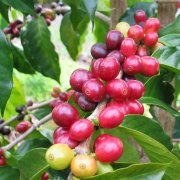
Boutique coffee SL28 variety is extremely rare in Central America, this tree species originated from Tanzania in East Africa
SL28 is extremely rare in Central America. This tree species originated from Lake Tanganyika in East Africa. It was discovered in 1931. Its leaves are broad and reddish. It can adapt to quite high altitude environment. It has excellent drought resistance and disease resistance. It also has higher yield than traditional trees. The performance of flavor is also unique. 1935 Scottish Labo

A brief introduction to the Market Price of Fine Coffee Bean varieties in Kenya in Africa
Auctions are also organized to meet the needs of dispatchers. This kind of auction usually has a small auction volume (3-6 tons each), with samples with the grower's logo for buyers to enjoy. After the auction, the exporters pack according to different flavors, different qualities and the quantity required by the blenders. This provides a great deal of flexibility for the dispatcher. Quality-conscious Germans and Nordic people are long-term buyers of Kenyan coffee.